
Sustainable Tourism in Tasmania: Adventure with a Positive Impact
At Cradle Mountain Canyons, we believe sustainable tourism in Tasmania should be about more than simply reducing our environmental impact. We want our business to have a positive impact on the environment, our community and the people who experience Tasmania with us.
We operate canyoning, packrafting and kayaking experiences in some of Tasmania’s most spectacular natural environments. These wild places are the reason people visit Tasmania—and the reason we love what we do. That gives us a responsibility to be custodians, not simply visitors.
Responsible adventure tourism
Our canyoning and packrafting tours take guests into remote and sensitive wilderness environments. Our guides carefully consider how we travel through these places, minimising disturbance to vegetation, wildlife and waterways.
We believe responsible adventure tourism means leaving no unnecessary trace.
Sometimes that means doing things that aren't particularly glamorous. On our remote and multi-day adventures, we use “poo tubes” to carry human waste out of the wilderness. Everything that comes into the environment with us comes back out.
For us, sustainability isn't just about major initiatives. It's about consistently making responsible decisions, including the small ones.
Creating a positive impact
Our philosophy is to aim for a net positive impact.
Tourism provides an opportunity to connect people with nature. When visitors experience Tasmania's wilderness firsthand, they can develop a much deeper appreciation for why these places are worth protecting.
Our guides are ambassadors for Tasmania's wild places. They don't simply lead guests through a canyon or down a river; they share their knowledge and enthusiasm to educate and help visitors understand what makes these environments special.
If our guests leave with a greater appreciation for Tasmania's natural environment, that's a positive outcome.
Electric transport
Transport is one of the challenges facing sustainable tourism. Getting guests and equipment to remote locations has traditionally meant relying on diesel vehicles.
With support from a grant, Cradle Mountain Canyons invested in a 14-seat electric bus, making us the first Tasmanian tour company to operate a fully electric bus. We also operate a fully electric vehicle as part of our business fleet and encourage our staff’s uptake of EVs by providing free fast charging at our home base.
Reducing emissions from our transport is an important part of our sustainability journey. It also demonstrates that tourism businesses can take practical steps towards adopting cleaner technology.
Low-impact adventure
Our products themselves are designed to provide immersive experiences with a light footprint. If our business stopped operating tomorrow, after removing some lightweight boarded tracks into Dove Canyon, there would be no evidence remaining of the tens of thousands of visitors who have experienced this area with us. Rivers are dynamic places that wash our sins away daily.
Packrafting allows us to combine camping and paddling to explore Tasmania's remote waterways without the infrastructure or heavy equipment associated with conventional overnight accommodation – we are light and nimble on the river.
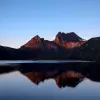
Our Dove Lake kayaking experience provides another way to experience the Cradle Mountain landscape. Our kayaks are hand-built from King Billy pine, connecting the experience with Tasmania's unique natural environment.
People matter too
Sustainability isn't only about the environment. A sustainable tourism business should also benefit its people and community.
Our guides are at the heart of Cradle Mountain Canyons, and we strive to create a workplace where people feel valued and proud of what they do. We support the local economy by employing people, training and skill-building and working with other Tasmanian organisations to maintain networks and communities of practice.
The wilderness is the reason Cradle Mountain Canyons exists
Our goal is to ensure that adventure tourism helps people experience, value and protect these places—not just today, but for generations to come.